
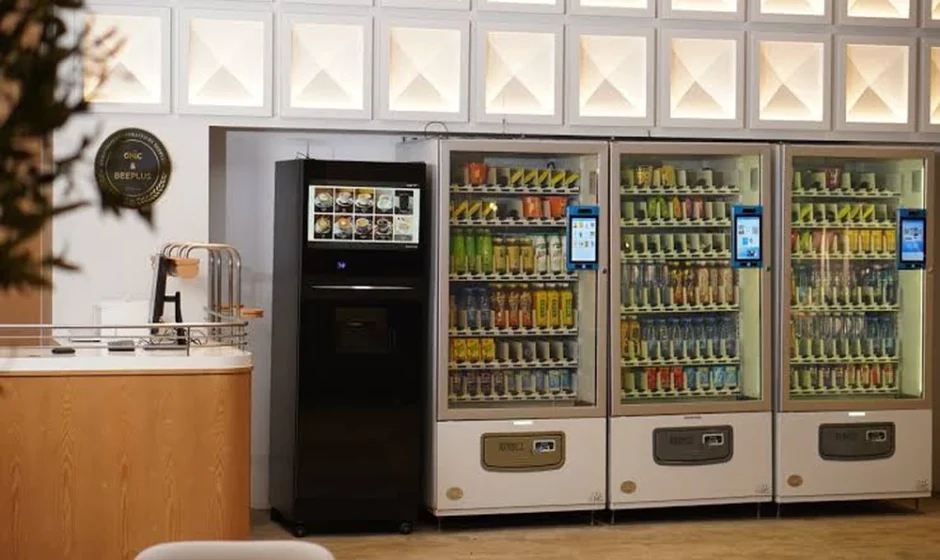

Self-service coffee is judged by more than the drink. Users notice whether cups are available, lids fit, spills are managed and the station looks clean enough to trust. A machine may prepare coffee in seconds, but a poorly organised surrounding area can create queues, waste and a negative impression.
The strongest stations are designed as complete customer journeys. The user should be able to select a drink, collect it safely, add any extras and leave without crossing paths with the next person or searching through mismatched supplies.
Design the station around the sequence of use
The layout should follow the customer’s movement: cup access where required, machine selection, drink collection, lids, condiments and waste. Reversing that sequence causes people to step back into the queue.
Frequently used items belong within easy reach, while reserve stock should be nearby but not clutter the counter.
Clear labels reduce hesitation, particularly where several cup sizes or drink systems are available.
Observing the station during a busy period often reveals bottlenecks that are invisible when the area is empty.
This part of the decision deserves attention because vending machine coffee and disposable coffee cups are often purchased as isolated products even though the customer experiences them together. A useful plan connects product choice with preparation, service and the moment the drink is consumed. It is worth reviewing the decision in the normal service environment rather than relying only on a supplier description or a quiet tasting. Temperature, preparation time, cup size and the people using the product can all change whether the choice feels successful after repeated use.
Choose cups that fit the machine physically
Cup height, rim diameter and capacity must suit the dispensing bay and drink programme. A cup that is too short can increase splashing, while one that is too tall may not fit safely beneath the outlet.
When the machine drops cups automatically, compatibility becomes even more critical. The wrong specification can lead to jams or failed vends.
Lids should be matched to the exact rim size rather than assumed to fit because the nominal ounce capacity appears similar.
Testing a full sleeve through the normal workflow is safer than approving a cup from a single sample.
For UK buyers, the practical test is whether the choice remains workable after the first week. Stock movement, staff confidence and repeated drink quality reveal far more than an impressive one-off tasting. It is worth reviewing the decision in the normal service environment rather than relying only on a supplier description or a quiet tasting. Temperature, preparation time, cup size and the people using the product can all change whether the choice feels successful after repeated use.
Protect drink strength across cup sizes
A larger cup does not automatically mean a better offer. If the machine dispenses the same coffee dose with more water, users receive a weaker drink and may lose confidence in the station.
Each size should have a deliberate recipe or a clear role. Some sites benefit from one standard size because it simplifies stock, pricing and machine configuration.
If several sizes are retained, labels should help users select the correct cup before beginning the vend.
Cup strategy and beverage programming need to be reviewed together.
The strongest approach is to make one controlled change at a time and record the result. That prevents a problem in equipment, recipe or handling from being incorrectly attributed to the product itself. It is worth reviewing the decision in the normal service environment rather than relying only on a supplier description or a quiet tasting. Temperature, preparation time, cup size and the people using the product can all change whether the choice feels successful after repeated use.
Keep lids, stirrers and condiments under control
Loose lids and open condiment boxes quickly make a station look untidy. Dispensers can improve hygiene and reduce the number of items touched by multiple users.
Sugar, sweetener and whitener should be positioned after the machine so people can customise without blocking drink selection.
Stirrers and waste bins need enough capacity for peak periods. An overflowing bin can undermine the cleanliness of the whole area even when the machine itself is spotless.
The best accessory setup provides choice without creating an obstacle course.
This is also where clear internal guidance helps. A short recipe or purchasing note can preserve the original intention when several people order, prepare or serve the product. It is worth reviewing the decision in the normal service environment rather than relying only on a supplier description or a quiet tasting. Temperature, preparation time, cup size and the people using the product can all change whether the choice feels successful after repeated use.
Plan for spills before they happen
Drip trays have limited capacity and should not be treated as the only spill-control measure. A wipeable counter, nearby cleaning materials and scheduled checks protect the station throughout the day.
Cup overflows often indicate incorrect placement, unsuitable cup size or a recipe problem rather than careless users alone.
Floor safety matters in public areas. Leaks should be addressed quickly and the station positioned so that cleaning does not block a major walkway.
A visible, well-maintained area encourages users to leave it in better condition.
Commercial operators should include customer behaviour in the review. What people reorder, finish and recommend is often more useful than what attracts initial curiosity. It is worth reviewing the decision in the normal service environment rather than relying only on a supplier description or a quiet tasting. Temperature, preparation time, cup size and the people using the product can all change whether the choice feels successful after repeated use.
Assign ownership for stock and presentation
Self-service does not mean staff-free. Somebody still needs to check cups, lids, ingredients, waste and cleanliness at defined times.
A short checklist can divide tasks into opening, midday and closing checks. High-volume sites may need more frequent attention around known peaks.
Minimum stock levels prevent the station from running out of cups while the machine still has coffee available.
Clear responsibility avoids the common situation in which several teams notice a problem but assume another team will solve it.
Home users can apply the same logic on a smaller scale by choosing realistic pack sizes and testing the product in their normal mug, brewer and routine rather than under idealised conditions. It is worth reviewing the decision in the normal service environment rather than relying only on a supplier description or a quiet tasting. Temperature, preparation time, cup size and the people using the product can all change whether the choice feels successful after repeated use.
Use feedback to refine the setup
Repeated cup waste may signal that users select the wrong size or take more than one because supplies are difficult to separate.
Queueing may come from confusing menus, slow payment or condiment placement rather than machine brewing time.
Comments about weak coffee, leaking lids or drinks being too hot should be connected to the relevant recipe or packaging decision.
Small layout and labelling changes can improve the experience without replacing the machine.
No single specification solves every setting. Volume, audience, equipment and desired flavour all influence whether a decision is genuinely suitable. It is worth reviewing the decision in the normal service environment rather than relying only on a supplier description or a quiet tasting. Temperature, preparation time, cup size and the people using the product can all change whether the choice feels successful after repeated use.
Final thoughts
A self-service station succeeds when every step around the drink feels straightforward. Vending machine coffee provides the speed, while disposable coffee cups, lids and accessories determine whether users can carry that drink safely and confidently. By designing the layout as a sequence, confirming compatibility and assigning daily ownership, operators can keep the station fast, tidy and dependable.
Frequently asked questions
Can any paper cup be used in a vending machine?
No. The cup must match the machine’s dispensing bay or automatic cup-drop specification, as well as the programmed drink volume.
Is it better to offer one cup size or several?
One size simplifies stock and recipes, while several sizes can offer choice. The best approach depends on user needs and machine configuration.
What causes frequent spills at self-service coffee stations?
Common causes include unsuitable cup dimensions, incorrect placement, overflowing recipes, full drip trays and poor station layout.