
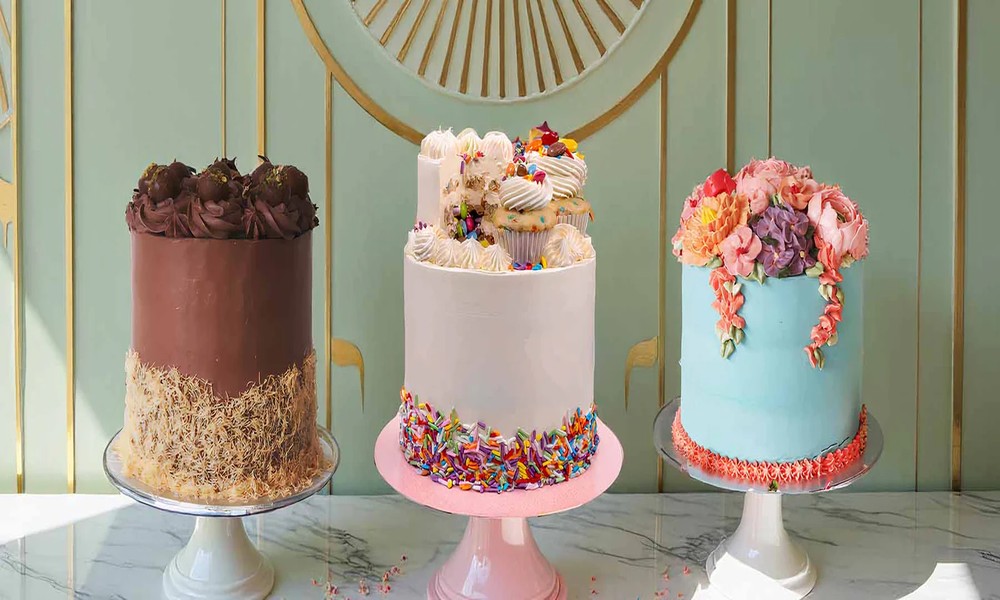

Getting the cake size right matters more than most people think. Too small and you’re cutting embarrassingly thin slices. Too large and you’re left with half a cake going stale on the kitchen counter. Whether you’re ordering from a bakery or baking at home, knowing exactly what size you need saves money, stress, and a great deal of awkwardness on the day.
Understanding Cake Portions Before You Buy
Before jumping into specific sizes, you need to understand how portions work. A dessert portion is generous, roughly 4cm x 5cm per slice. A finger portion, often used at parties alongside other food, is smaller, around 2.5cm x 5cm. The same cake can serve 12 people as a dessert or 24 people as a finger slice. Always decide which serving style suits your party before choosing a size.
Most bakeries calculate portions based on sponge cakes with a single layer of filling. If your cake has multiple tiers, extra layers, or dense ingredients like fruit cake, the serving count shifts considerably. Fruit cake, for instance, cuts into far smaller portions because it’s so rich.
What Size Cake for 10 People?
For 10 people, a 6-inch round cake is your standard choice. This typically gives you 10 to 12 dessert portions from a two-layer sponge. If you’re serving a lighter crowd or adding extra puddings to the table, a 6-inch works perfectly.
Prefer a square cake? A 5-inch square offers comparable servings and actually cuts more uniformly, which helps when you want neat, even slices.
If the party leans towards bigger appetites, think teenagers or a crowd that skips the buffet food, step up to a 7-inch round. That gives you 12 to 14 portions comfortably without anyone feeling short-changed.
What Size Cake for 20 People?
Twenty people require a noticeably bigger cake. An 8-inch round is the most popular choice at this number, yielding around 20 to 24 dessert portions. It’s a practical, widely available size that most bakeries stock as standard.
For a square option, a 7-inch square cake covers 20 people well. Square cakes often yield slightly more portions than their round equivalents because there’s no curved wastage at the edges.
If you want something that looks more impressive on the table without going full tiered cake, consider a 9-inch round. This gives you 26 to 28 portions, which leaves room for second helpings or slightly thicker slices, always a crowd-pleaser.
What Size Cake for 30 People?
Thirty guests means you’re now in proper celebration territory. A 10-inch round cake comfortably serves 28 to 32 people, depending on how generously you cut. This is a substantial cake with real visual presence on a table.
A 9-inch square is another solid option for 30 people. Square cakes at this size are particularly practical because they slice cleanly into rows, making it easy for the cutter to keep portions consistent.
Many people hosting for 30 guests choose a two-tier cake instead. A classic combination, such as a 6-inch tier on top of a 9-inch base, looks spectacular and serves between 30 and 35 people without needing an enormous single-layer cake. The added height makes for better photographs, too.
Helpful Rules of Thumb to Remember
Round up rather than down. It’s far better to have two or three extra slices than to run short. Guests notice when the cake runs out.
Dense cakes serve more people. A rich chocolate fudge cake or a classic Victoria sponge packed with cream cuts differently from a light chiffon. Ask your baker how they calculate portions for the specific recipe you’re ordering.
Always account for non-cake-eaters at the party. Guests who are gluten-free, diabetic, or simply not fond of cake still count towards your headcount but won’t take a slice. In a group of 30, you might realistically serve 22 to 25 people, which means a 10-inch cake is still worth having for generous portions.
Order half a size up if in doubt. Leftover birthday cake is never a problem. Running out always is.